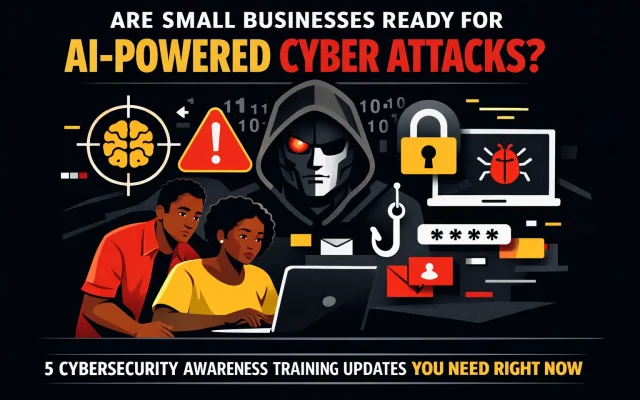
Building a business is hard enough without having to worry about a hacker in another timezone snooping through your proprietary files. If you’ve shifted your team to a remote or hybrid model, you’ve probably enjoyed the benefits: lower overhead, a wider talent pool, and maybe even a bit more peace of mind for your employees. But there’s a catch. When your team moved from the office to their living rooms, your business "perimeter" effectively disappeared.
In the old days, you had a literal office with a firewall that acted like a moat around a castle. Today, your business is more like a distributed network of outposts, and each one is a potential entry point for someone who shouldn’t be there.
If you’re a small business owner, you might think you’re too small to be a target. Unfortunately, that’s exactly what cybercriminals are hoping you’ll think. For remote teams, the human element is often the weakest link, not because your employees aren’t smart, but because they haven’t been trained to spot the traps. That’s where cybersecurity awareness training comes in.
Why Remote Teams are the New Front Line
Remote employees face unique vulnerabilities that office-based staff simply don't. When someone is working from home, they’re often operating outside the traditional technical safeguards you’d find in a corporate HQ. They might be using a home Wi-Fi network shared with three teenagers and a smart fridge, or they might be tempted to use their work laptop to check a personal email that contains a malicious link.
According to recent industry research, remote employees are often the first targets in cyberattacks because they are perceived as easier to manipulate through social engineering. Without a coworker sitting next to them to ask, “Hey, did you get this weird email from HR too?”, it’s much easier for an employee to fall for a scam.
As a leader, your job isn't just to buy the right software; it’s to set the tone from the top. When you prioritize cybersecurity in your company communications, you’re telling your team that protecting the business is everyone’s responsibility.

The Core Curriculum: What Your Team Needs to Know
You don’t need to turn your marketing manager into a coding expert. You just need to give them a "digital street-smarts" upgrade. A solid training program focuses on high-risk behaviors that could lead to a breach. Here are the pillars of what your team should be learning.
1. Phishing and Social Engineering
This is the big one. Most successful attacks start with a simple email or a message that looks totally normal. Attackers often target isolated employees with fake IT requests or urgent messages from "the CEO" asking for a quick favor.
Your team needs to learn how to verify requests. If they get a message asking for a password or a wire transfer, they should know to reach out through a different, official channel, like a quick Slack message or a phone call, to confirm it’s real. Training them to look for the "red flags" in email addresses and links is the best defense you have.
2. Secure Network Usage (The VPN Talk)
Public Wi-Fi is a nightmare for security. If an employee decides to work from a coffee shop for the afternoon, they are essentially opening a door for hackers to intercept their data.
Training should cover the "Never Public Wi-Fi" rule unless they are using a company-provided VPN. At The Arch Group, we often emphasize that why cybersecurity investment is crucial isn't just about the software; it's about the habits that protect your data. This includes ensuring their home routers are updated and using strong, unique passwords.
3. Device and Patch Hygiene
We’ve all seen the "Update Available" notification and clicked "Remind Me Tomorrow" for two weeks straight. In a remote setting, those updates are critical. Most software updates include security patches for vulnerabilities that hackers are already trying to exploit.
Encourage a culture where updates are mandatory and immediate. Additionally, there should be a clear boundary between personal and work devices. If your employee’s kid uses the work laptop to play games and accidentally downloads malware, your business data is now at risk.

Moving Beyond Boring Slide Decks
Let’s be honest: nobody likes sitting through a 45-minute PowerPoint presentation about passwords. If you want the training to actually stick, it needs to be engaging and, dare I say, a little bit of fun.
Instead of a one-off session that everyone forgets by Friday, try these methods:
- Real-Life Simulations: Conduct a live "phishing" demo during a team meeting. Show them exactly what a fake email looks like and how easy it is to click the wrong thing.
- Simulated Phishing Tests: This is one of the most effective tools in our cybersecurity awareness training and compliance services. We send out realistic (but harmless) fake phishing emails to see who clicks. It’s not about "catching" people to punish them; it’s about identifying who needs a little more help and training.
- Multimedia Resources: Use short videos, infographics, and quick tips in your company newsletter. Small, digestible bites of information are much easier to remember than a massive manual.
How Often Should You Train?
Frequency is the secret sauce. A study found that employee vigilance fades over time, and threats evolve almost daily. If you only talk about security during onboarding, you’re leaving your business wide open.
Industry best practices suggest formal training at least twice a year, but many successful small businesses do quarterly check-ins. Think of it like a fire drill. You don't do it once and hope for the best; you do it regularly so that when a real threat appears, the response is second nature.

Creating a "Security First" Culture
One of the biggest mistakes a business owner can make is creating a culture of fear. If an employee clicks a bad link and is terrified of getting fired, they might try to hide it. That’s a disaster.
You want to foster a "blameless" environment where employees feel empowered to report suspicious activity immediately. If they think they’ve made a mistake, they should know exactly who to contact and feel confident that they’ll be supported, not scolded. The faster you know about a potential breach, the faster you can shut it down.
Integrating security into your regular team "town halls" or meetings keeps it on the radar without it feeling like a chore. Share stories (without naming names) of scams you’ve seen or lessons learned. When your team sees that you take it seriously, they will too.
How The Arch Group Can Help
I know what you’re thinking: "Janay, I’m trying to run a business, not a tech school. I don't have time to design a curriculum."
We hear you. At The Arch Group, we specialize in helping small businesses navigate the complexities of the digital world. Whether it’s through our business consulting or our specialized cybersecurity training, we take the heavy lifting off your shoulders.
We don't just give you a login to a boring video site. We partner with you to create a training program that actually fits your team’s culture and specific needs. We focus on making the "right choice" the "easy choice" for your employees.
The Bottom Line
Your remote team is your greatest asset, but without the right training, they are also your biggest security risk. Investing in cybersecurity awareness isn’t just about avoiding a hack; it’s about building a resilient, confident team that can work from anywhere without fear.
If you’re ready to turn your remote workforce into a human firewall, the time to act is now. You don't need a massive enterprise budget to protect your dream: you just need a plan and a partner who knows the ropes.
Ready to secure your team? Contact us at The Arch Group today and let’s chat about how we can protect what you’ve built. Whether you need a full security audit or just a better way to train your remote staff, we’re here to help you move forward with confidence.